Best Study Schedule for Students (Complete Guide) is an important topic that helps students to increase their concentration, use their time wisely and do well in exams. Many of us students cannot study properly because we do not have a specific plan. In this complete guide, we will learn how to create a realistic and balanced study schedule for ourselves. How to study more effectively with less stress by using effective strategies like choosing the right time, dividing time (time blocking), and regular revision—all are highlighted here.

Introduction
Creating a study schedule is one of the best ways to increase our focus on our studies, reduce stress, and perform well in exams.
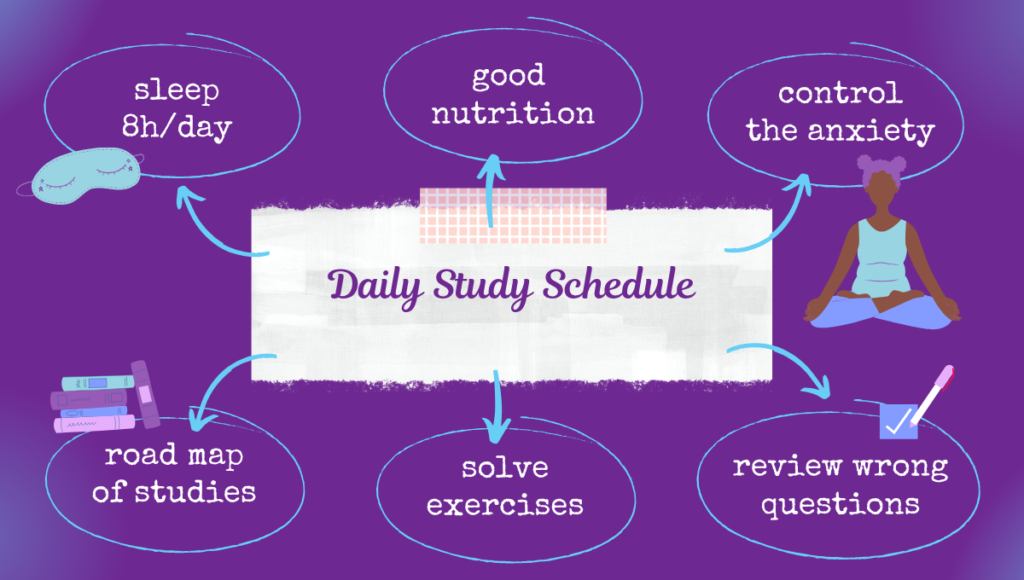
Many of us students suffer from the following issues:
- Distraction due to mobile phones
- Coaching and school pressure
- Poor time management
In this guide we will learn:
- How to create a perfect study schedule
- The best study strategies
- Examples of real-life routines
Why we need a study schedule, Because a good study routine helps us in the following ways:
- Stay organized
- Avoid last-minute stress
- Improve memory and focus
- Balance study and rest
- Prepare better for exams
Without a plan, we students unknowingly waste 3-5 hours a day.
Step by step: We need to know how to create a study schedule
1. We need to know our daily schedule
We need to write down:
- School/College time
- Coaching class
- Leisure time
This will help us find the actual time for studying.
2. Set clear goals for studying:
- Bad goal: “I will study math”
- Good goal: “I will finish 2 chapters + practice 20 numbers”
3. We need to find the best time to study:
Ask yourself:
Can you get up early in the morning? → Study in the morning
Can you get up early at night? → Study in the evening
We, as students, prefer:
- Early morning (quiet environment)
- Night (less distractions)
4. Use Smart Study Blocks
Follow this proven method:
- 50 minutes of study
- 10 minute breaks
Or
- 25 minutes (Pomodoro)
- 5 minute breaks
This increases focus and prevents fatigue.
5. Review daily
Review is the key to long-term memory.
Best method:
- 20-30 minutes daily
- Weekly full review
6. Maintain the right balance between subjects
This mistake should be avoided:
Studying only favorite subjects
Instead:
- Difficult subjects → easy subjects
- Theory → practical
7. Rest and sleep should be included
Sleep: 7-8 hours
Breaks: Every 1 hour
No rest = less productivity
Sample Reading Schedule (for students)
Morning
- 6:00 – Wake up
- 6:30 – Review
- 8:00 – School
Afternoon
- 3:00 – Rest
- 4:00 – Homework
- 5:00 – Break
Evening
- 6:00 – Maths/Science
- 7:00 – Dinner
- 8:00 – English/ICT
- 9:30 – Sleep
Best Study Strategy (Game-Changer):
1. Active Memorization
Instead of Reading → Test Yourself
Question Yourself After Reading
2. Spaced Repetition
Revise Like This:
- Day 1 → Learn
- Day 2 → Review
- Day 7 → Review Again
3. Feynman Technique
Explain the subject like a teacher
If you can’t explain → you didn’t understand
4. Practice Previous Year Question Papers
Very Important for SSC/HSC
Finally Solve 5-10 Year Question Papers.
Common mistakes we should avoid:
- Making unrealistic schedules
- Not revising
- Reading for long periods of time without breaks
- Distraction due to mobile phone
- Omitting difficult topics
How to stay consistent with your schedule:
- Start small (3-4 hours per day)
- Keep your schedule in mind
- Track your progress daily
- Reward yourself weekly
Consistency > Perfection
Pro tips for students:
- Study early in the morning (less noise)
- Use offline notes during load shedding
- Limit Facebook/YouTube usage time
- Smartly combine coaching and self-study.
Frequently Asked Questions:
1. What is the best study schedule for students?
A balanced schedule with fixed study times, breaks, and revision is best for students.
2. How many hours should a student study per day?
Students should study for 4-8 hours, depending on their class and goals.
3. How can I follow my study schedule every day?
Start small, be consistent, and write down your daily progress.
4. Is it better to study at night than in the morning?
It depends on the student. Choose the time when you are most focused.
5. How to avoid distractions while studying?
Put your phone away, use a quiet place, and follow a fixed study routine.
Conclusion:
A perfect study schedule doesn’t mean studying all day long—it means studying intelligently and consistently.
If we can follow the strategies in this guide, we can:
- Increase our attention span
- Do well on exams
Start today. Even a small routine can change our future.