

Introduction:
For today’s students, balancing studies and mobile phone use has become a real test. The smartphone in your hand brings you your studies, communication or any necessary information in an instant.
However, excessive phone addiction plays a major role in distracting attention, slowing down work, disrupting sleep and ultimately harming your studies.
However, the hope is that students do not have to stop using their phones altogether. Rather, they need to develop some good habits so that this technology does not harm your studies but helps speed up your studies.
In this article, we have discussed exactly why mobile phones harm studies, how to maintain attention while studying and some practical ways that will help you do well in studies even in the digital age.
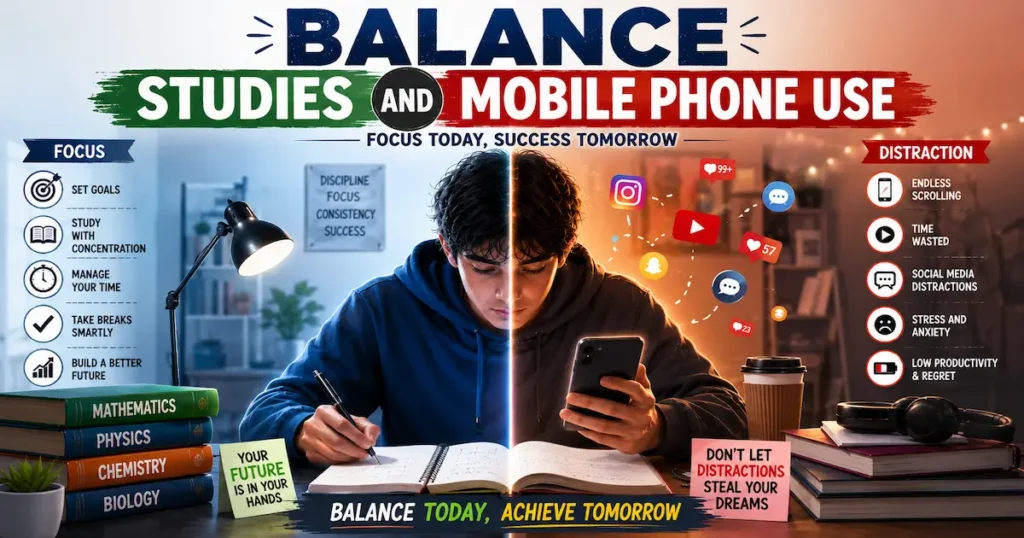
Why do students struggle to balance studies and mobile phone use
Most students initially pick up phones for good purposes or for study purposes.
For example:
- Watching videos related to studying
- Searching for new information
- Using various learning apps
- Participating in online classes
However, educational use often turns into entertainment.
A student might open YouTube to watch a math lesson and end up spending an hour watching unrelated videos.
This trend occurs because modern apps are designed to grab your attention.
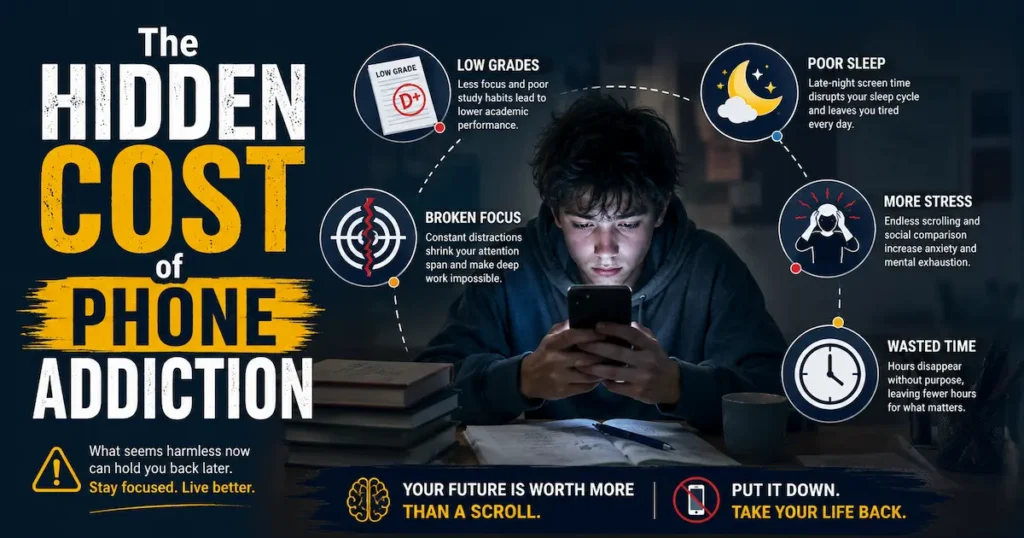
The hidden cost of excessive mobile phone use
It is not true that using a smartphone is always bad.
The problem arises when its use goes beyond the rules and limits.
The harms that can be caused by excessive phone use are:
- Reduced attention span
- Improper use of time
- Inadequate sleep at night
- Increased mental unrest and stress
- Poor test results
- Not submitting assignments on time
Many students spend the whole day studying, but at the end of the day, nothing gets done because their minds keep wandering to their phones.
Understanding the psychology of distractions caused by phones
Today’s smartphones can play a great game with your psychology.
Every notification, new message on the phone creates a kind of curiosity in your mind.
Then your brain expects to find something entertaining or joyful on the phone screen, such as:
- A new like on a photo
- Messages sent by friends
- Comments or reactions
- A funny video
- Any new update
In this way, a chain is created, due to which repeatedly picking up the phone becomes a habit of your subconscious mind.
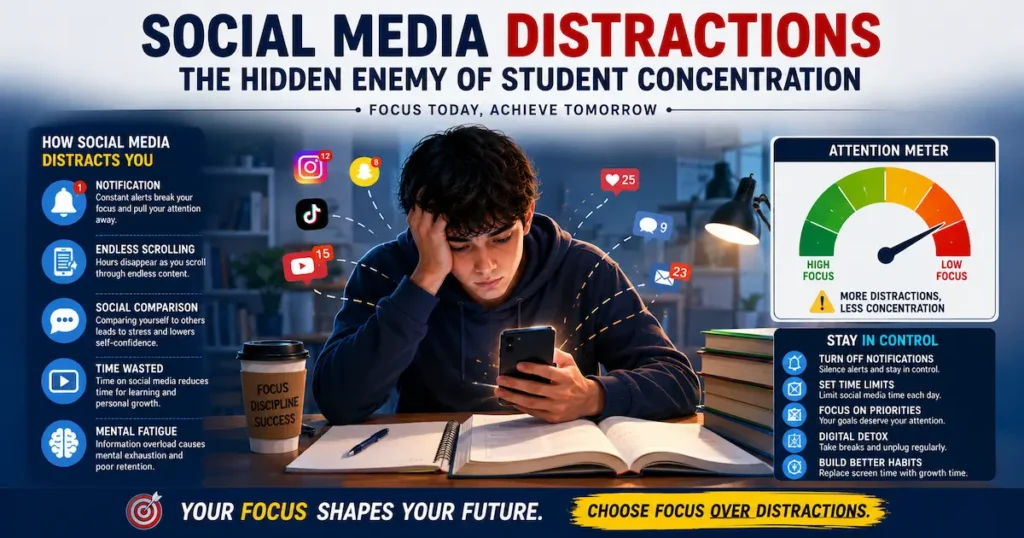
How social media affects attention
Platforms like Facebook or Instagram are constantly competing to grab your attention.
- Unlimited scrolling system
- Small attractive videos
- Arranging content according to your mind
- Push notification alerts—all these features are basically traps to keep the user on the screen for a long time.
As a result, you can notice some negative changes in yourself:
- Lack of ability to maintain attention for a long time
- Frequently wandering attention
- Reduced ability to think deeply about something
- Waste of time even while sitting at the study table
Balance between studies and mobile phones: Why is it important
Students who can maintain a good balance between their studies and phone screen time are much ahead of others in life.
The benefits they get as a result:
- Ability to do quite well in exams
- Focusing deeply on any task
- Completing a lot of reading in a short time
- A completely peaceful sleep at night
- No extra pressure on the mind
- Getting some extra time for yourself
The right combination of technology and studies helps you reach the peak of success without increasing your mental stress.
Signs that your phone is affecting your studies
Many times, students themselves do not realize how much this phone habit is destroying their studies from the inside.
The following symptoms will make the matter clear:
- Your hand automatically goes to your phone every two to three minutes
- Keeping a few apps running in the background even though you have a book to read in front of you
- Becoming restless when your phone is not nearby
- Feeling more comfortable rubbing your fingers on the screen than reading a book
- Falling behind on the date of a test or assignment
- Not being able to remember what you read even after studying for a long time
If you find yourself matching these symptoms, then you know that now is the right time to change your habits.
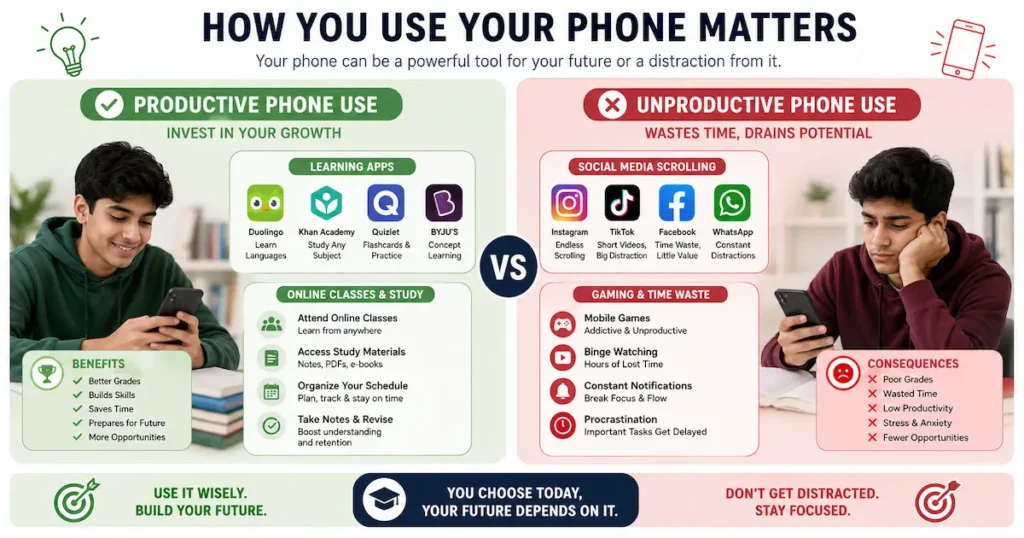
Productive vs. Unproductive Mobile Phone Use
Not all phone use is a waste of time.
We just need to understand the difference between good and bad use.
| Productive Use | Unproductive Use |
| Watching educational videos | Scrolling reels or shorts without purpose |
| Using learning apps | Indulging in unnecessary games or entertainment |
| Attending live or online classes | Wasting time by playing games continuously |
| Doing research for studies | Spending hours after hours on social media |
| Checking digital notes or flashcards | Checking annoying notifications during work |
The point is not to stop using the phone altogether, but to put it to good use.
Create a daily study schedule
The easiest way to balance your daily study and mobile phone habits is to stick to a structured routine.
Example of a typical study routine
| Time | Activity |
| 7:00 AM | Waking up and light exercise |
| 8:00 AM | Studying difficult or important subjects |
| 10:00 AM | A short break to check the phone |
| 10:15 AM | Starting to study mindfully again |
| 1:00 PM | Afternoon bath and lunch |
| 2:00 PM | Revising the morning lessons once more |
| 5:00 PM | Wandering around and a bit of screen time |
| 8:00 PM | Finishing school or college homework |
| 10:00 PM | Keeping the phone away and preparing for sleep |
If you have a specific time allotted for using your phone, your mind won’t be constantly distracted while you’re studying.
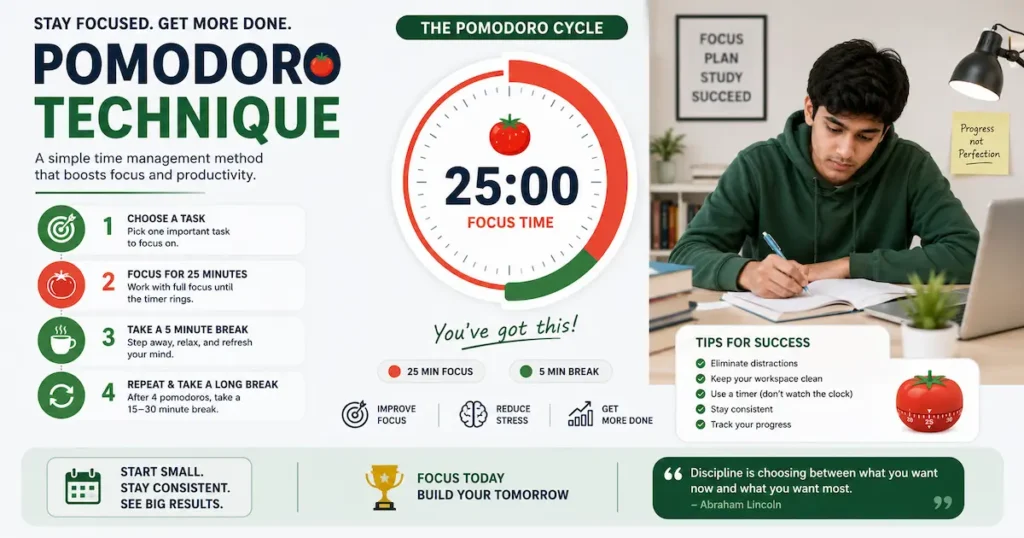
Using the Pomodoro Technique
The Pomodoro Method is a very effective way to keep your mind focused at the study table.
The rule is very simple:
- Read with full attention for 25 minutes straight.
- Then take a short break of 5 minutes.
- Repeat this rule four times in a row.
- Then take a longer break, say 15-20 minutes.
What to do during those 25 minutes of reading:
- Keep your phone away from you or in another room.
- Silence all notifications.
- Focus only on finishing a specific reading.
These tricks will relieve your mental fatigue and help you memorize reading faster.
Try a Deep Work Session
Deep work means putting away all kinds of nonsense thoughts and distractions and immersing yourself in a task.
The main rules of this session are:
- Keep your phone completely out of sight or in another room.
- Cut off unnecessary tabs on your laptop or computer.
- Sitting down with the most difficult or boring subject of the day.
This one-hour deep focus reading is much more useful than lounging with a book all day.
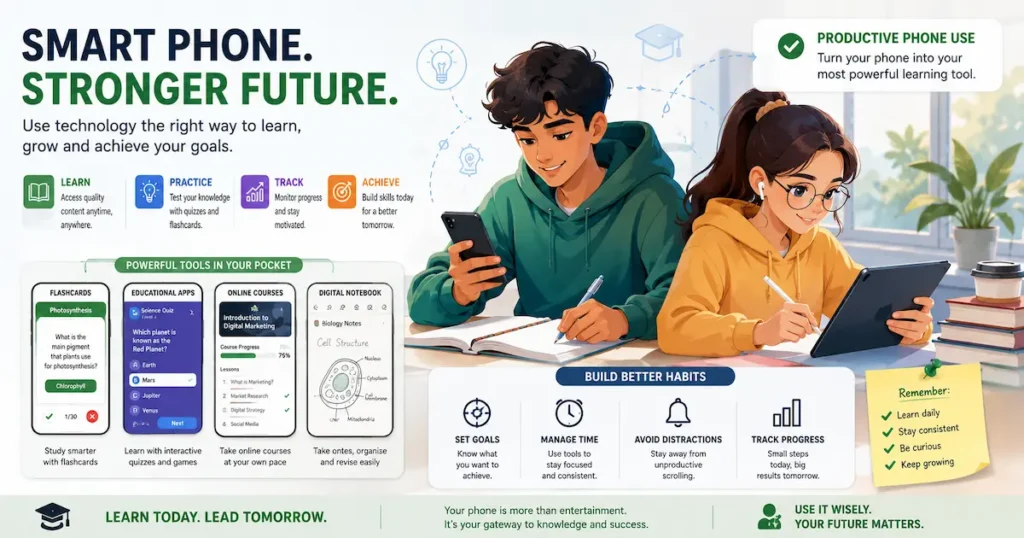
Using technology as a learning aid
If used wisely, this digital technology can be our greatest means of learning. For example:
- Flashcard apps to remember what you have read
- Various apps to learn a new language
- Online courses to improve your skills at home
- Listening to educational and motivational podcasts
- Digital notebooks to organize your reading
When you see your phone as just a learning tool, it will no longer be the enemy of your time.
Turn off unnecessary notifications
The sound of your phone ringing is the biggest enemy of your attention.
Once your attention is broken, it takes a long time for the brain to return to that reading again.
So to keep the reading environment calm:
- Turn off notifications from unnecessary apps today.
- Muting Facebook and Instagram message alerts.
- Turning on focus mode on your phone before sitting at the study table.
- If it is very urgent, turn on the “Do Not Disturb” option.
This small change will greatly increase your reading speed.
Create a phone-free reading space
Your concentration depends a lot on the environment in which you are studying.
Choose a corner of the house where there will be no phone traffic.
For example:
- A quiet study room in the house
- A clean and tidy study table
- A quiet place in the house
When the phone is not in front of your eyes, you will not even want to turn it on again and again.
The 20-20-20 rule for digital health
It is normal for eyes to be tired if you stare at the screen for a long time, and it can also cause headaches.
So use the 20-20-20 rule to keep your eyes healthy:
- After every 20 minutes of using the device:
- Look at an object at least 20 feet away
- And rest your eyes for at least 20 seconds
This small habit removes eye fatigue and maintains energy for studying.

Reduce phone use at night and improve sleep
A common habit of almost all students today is to scroll through their phones while lying in bed before going to sleep.
This habit completely ruins deep sleep at night.
So to sleep well:
- Put your phone away from your hand at least half an hour to an hour before going to bed.
- Read a magazine instead of your phone.
- Write down what you did all day in your diary.
- Plan out tomorrow’s study routine the night before.
If you sleep well at night, you will be twice as focused on studying the next day.
Replace phone time with meaningful activities
If you can spend your phone time on something else, your phone addiction will go away.
Things you can do instead of wasting time on your phone:
- Read a good book or novel
- Take a short walk or do some free-hand exercise in the afternoon
- Write down your thoughts in a diary
- Learn a new hobby or craft
- Spend some time in nature in the afternoon
- Chat with family or friends
These activities help to keep both your mind and body fresh.
Exam season strategy
Exam days require more concentration than any other time.
So in the days leading up to the exam:
Make a rule to use your phone only for emergencies
Only use your phone for the following tasks:
- To understand a group discussion or topic of study
- To communicate with someone very important
- To submit an extremely important assignment
Limit your use of social media
Stay away from Facebook or entertainment apps completely before the exam.
It is a very smart thing to do during the exam.
Increase your concentration sessions
Set aside a few large slots or times during the day to study without distractions and finish your studies.
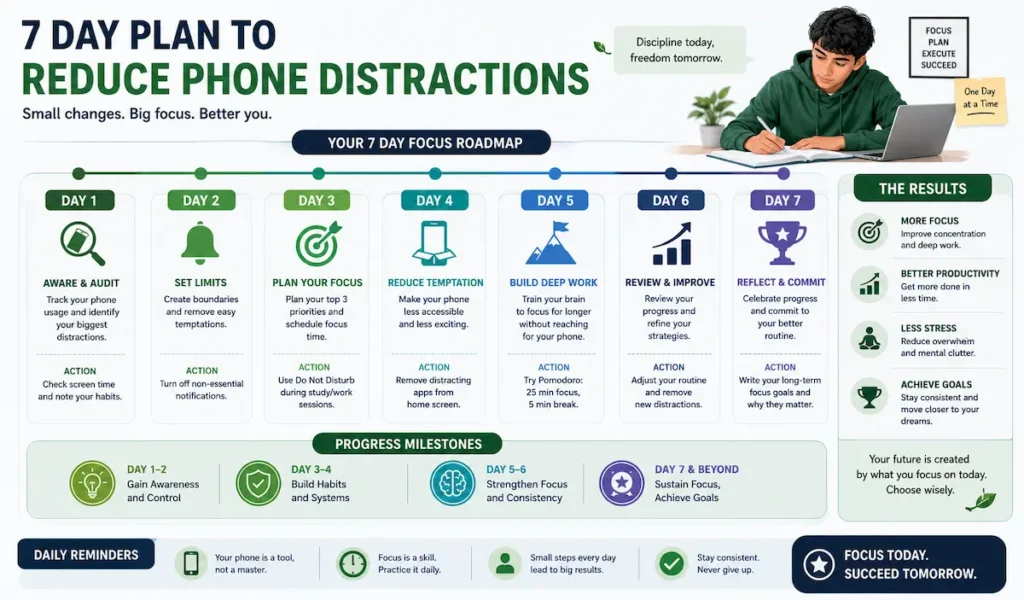
A simple 7-day plan to reduce your phone distractions
Day 1
Note down how much screen time you spent on your phone today.
Day 2
Turn off notifications from all unnecessary apps on your phone forever.
Day 3
Create a beautiful and realistic daily routine for studying.
Day 4
Apply the Pomodoro Technique (25 minutes of study, 5 minutes of break) while studying today.
Day 5
Lock your phone outside your room or in a drawer while studying.
Day 6
Reduce the time you spend on social media by 30% compared to before.
Day 7
Check your changes throughout the week and maintain this habit.
These small changes in one week will bring you great success in the future.
Common mistakes made by students
Trying to give up using your phone completely
Hastily deciding to stop using your phone completely is counterproductive. So, instead of giving up all at once, focus on balance.
Studying with notifications on
Even a small notification in the middle of studying is enough to ruin your entire half-hour of studying.
Multitasking
Sitting at the study table, chatting, watching videos, and reading books together—the biggest mistake, nothing enters your mind.
Ignoring sleep
If you wake up at night and waste your sleep by pressing your phone, it becomes impossible to remember what you have read the next day or pay attention in class.
Long-term benefits of healthy phone use
Students who can use technology to their advantage without making it a trap get the following benefits in the long run:
- The ability to pay close attention to any subject
- Achieving excellent results in class and exams
- The subject matter stays in their minds for a long time
- Relief from mental anxiety and a relaxed mind
- Developing a kind of confidence in your work
- The ability to complete a lot of reading in a short time
These good habits of the digital age will take you a long way not only in your student life, but also in your future career.
Frequently Asked Questions
How can students balance their studies and mobile phone use?
Keeping the phone completely out of sight while studying, following a specific routine and the Pomodoro technique are the best ways to balance their studies and mobile phone use.
Is using a mobile phone for studying always bad?
Absolutely not. Using a phone for studying or learning something new is very useful. The problem arises when it becomes a means of wasting time instead of studying.
How many hours should students use their mobile phone every day?
There is no such specific rule, but you should use your phone only for necessary and educational purposes, without wasting time on entertainment.
What is the best way to stop looking at your phone while studying?
The best way is to leave your phone in another room while studying, keep your profile on silent or focus mode, and follow a great technique like Pomodoro.
Can phone addiction affect your academic results?
Yes, of course it can. Excessive phone addiction can ruin your focus, increase laziness and ultimately lead to poor exam results.
Should students avoid social media completely?
No, there is no need to stop it completely. However, you should make sure that the use of social media does not interfere with your main studies or daily routine.
Conclusion:
In conclusion, maintaining a balance between studying and using your mobile phone is a very important skill for every student in today’s world.
A smartphone can either take you to the peak of your success or destroy your valuable time. It all depends on how you use it.
By making some rules for yourself, learning strategies to stay focused while studying and ensuring proper use of technology, any student can reap all the benefits of this digital world without compromising their studies.
Share your experience:
How do you maintain a balance between your own studies and using your mobile phone?
Do you use any special tricks, screen time locks or productivity apps to stay focused?
If you have any ideas or suggestions, please let us know by commenting below, which might help change the life of another student!