Introduction:
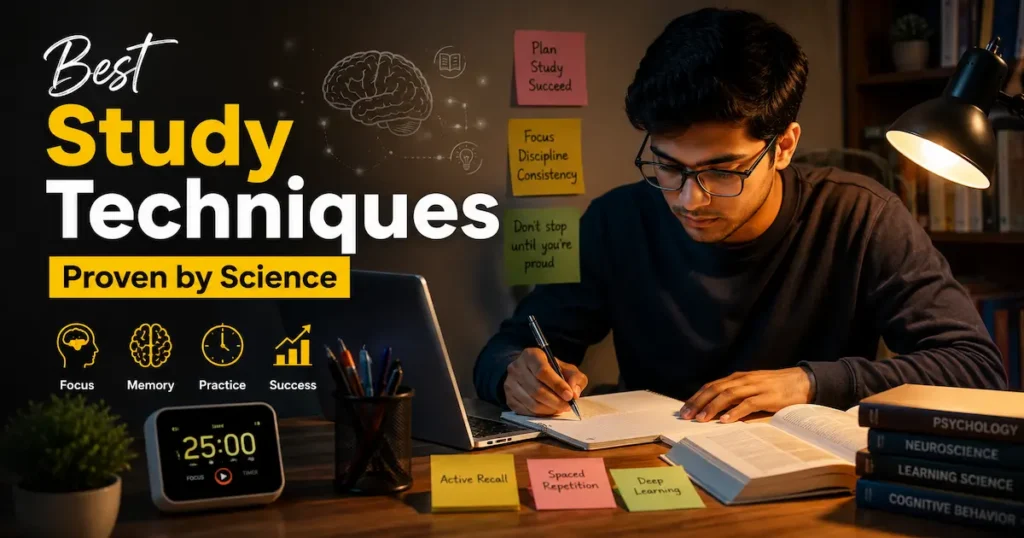
Studying in the best way does not mean just sitting with a book for hours. Its real purpose is to make your brain capable of remembering information in a short time. Various studies in psychological science prove that instead of memorizing notes continuously, thinking actively, revising at regular intervals, getting enough sleep, and reading with deep attention help you learn the most quickly.
Read this guide to the end to learn how to use these science-based methods in various real-life situations. Through this, you can improve your reading concentration, memory, and test results a lot.
Why most students study in the wrong way:
Many students waste a lot of time day after day to mark the necessary lines in the textbook or read the same notes repeatedly.
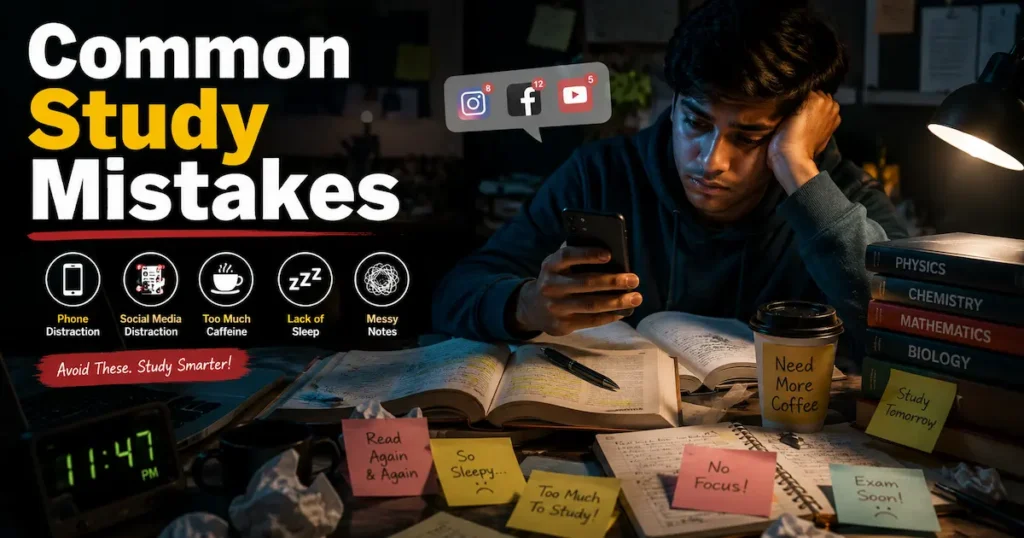
Although this method seems very effective at first glance, it cannot permanently take root in the brain if you revise lazily. According to research in cognitive psychology, the brain can only remember any information for a long time when students acquire knowledge on their own, organize it, and try to apply it in practice.
Some common ineffective habits include:
- Cramming the night before a test
- Studying without testing yourself
- Multitasking while studying
- Studying for long periods of time without taking breaks
- Studying when you are tired
The goal is not to study for longer. The goal is to learn more intelligently.
The science behind learning
Your brain stores information in several stages:
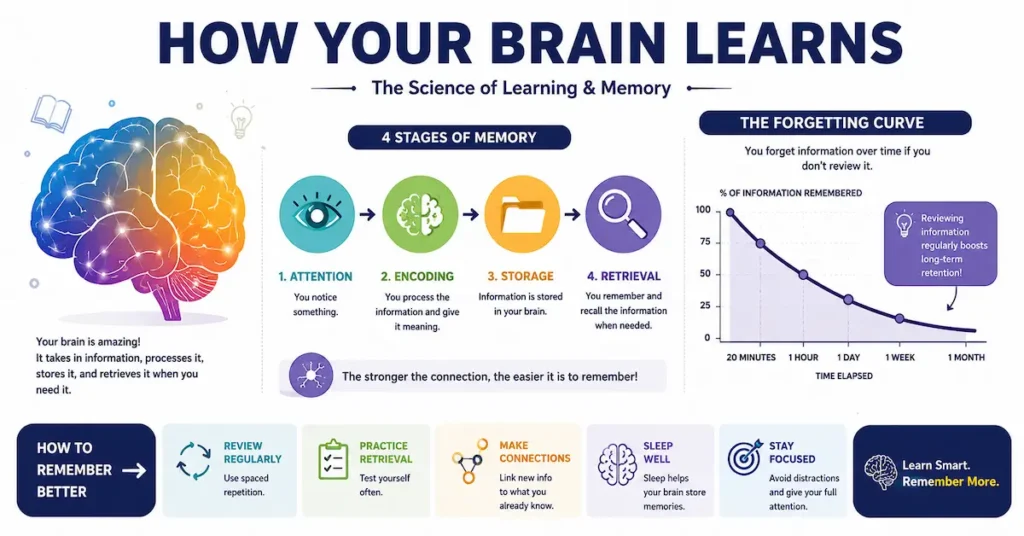
- Attention
- Encoding
- Storage
- Retrieval
If you repeatedly fail to retrieve information, the brain gradually forgets it. This process, discovered by psychologist Hermann Ebbinghaus, is called the forgetting curve.
The best study methods involve actively learning over and over again.
The best study technique proven by science
1. Active recall
Why it works
Active recall forces your brain to retrieve information from memory instead of just rereading it.
It strengthens your neural connections and improves your long-term retention.

Using active recall methods
- Close your notebook and explain the material out loud
- Using flashcards
- Answering practice questions
- Writing everything you remember from memory
- Teaching someone else
Example
Instead of rereading biology notes for an hour:
- Read for 10 minutes
- Close the book now
- Write down key ideas from memory
- Check for mistakes
- Repeat
Students who use active recall methods are often able to remember information for much longer periods of time.
2. Spaced Repetition
The best study technique for long-term memory
Spaced repetition means reviewing the material at increasing intervals, rather than memorizing everything at once.
Why Spaced Repetition Works
The brain strengthens memory by reviewing information each time it is reviewed, before it is forgotten.
Simple Review Schedule
- Day 1 → Learn the material
- Day 2 → Quick Review
- Day 4 → Review Again
- Day 7 → Test Yourself on What You’ve Learned
- Day 14 → Final Review
Apps like:
- Anki
- Quizlet
Apps can help automate this process.
3. The Feynman Technique
Named after physicist Richard Feynman, this technique helps improve deep understanding.
Steps
- Choose a topic
- Choose simple language
- Explain the topic
- Find gaps in understanding
- Re-simplify
If you can’t explain something simply, you probably don’t understand it fully.
4. Intersession
Most students study for hours on end on a single subject.
Science says that studying multiple subjects together increases problem-solving ability.
An example of studying
- 30 minutes of math
- 30 minutes of chemistry
- 30 minutes of history
- Back to math again
This forces your brain to adapt and improves your flexible thinking.
5. Pomodoro Technique
The brain’s concentration decreases after a long period of intense attention.
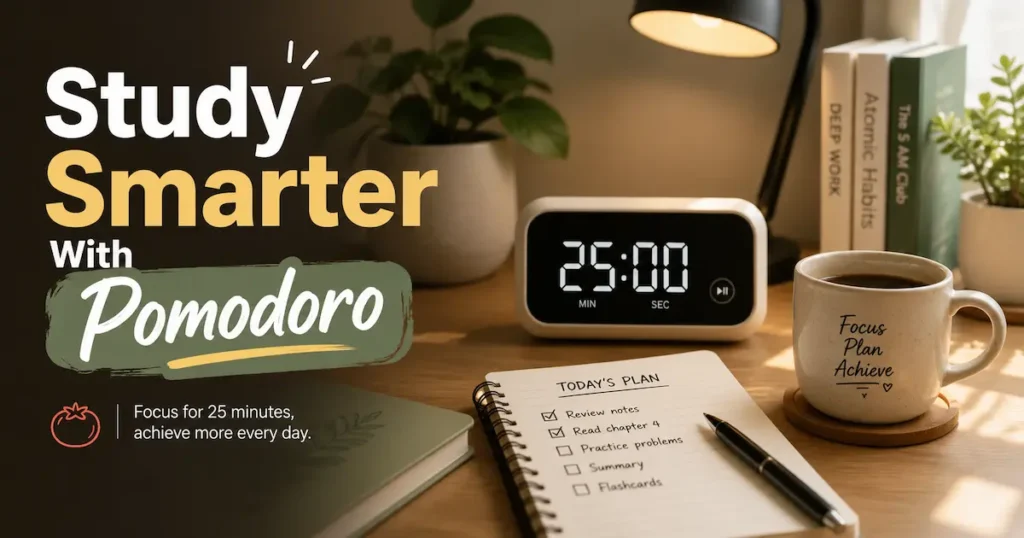
Studying with breaks in the Pomodoro Technique does not decrease the brain’s concentration.
Suggested structure
- Study for 25 minutes with concentration
- Take a 5-minute break
- Repeat 4 times
- Take a longer break
The benefits include:
- Improves concentration
- Reduces mental fatigue
- Reduces procrastination
6. Dual coding
Dual coding uses pictures and words together.
Your brain processes images differently than written text, which increases your ability to remember.
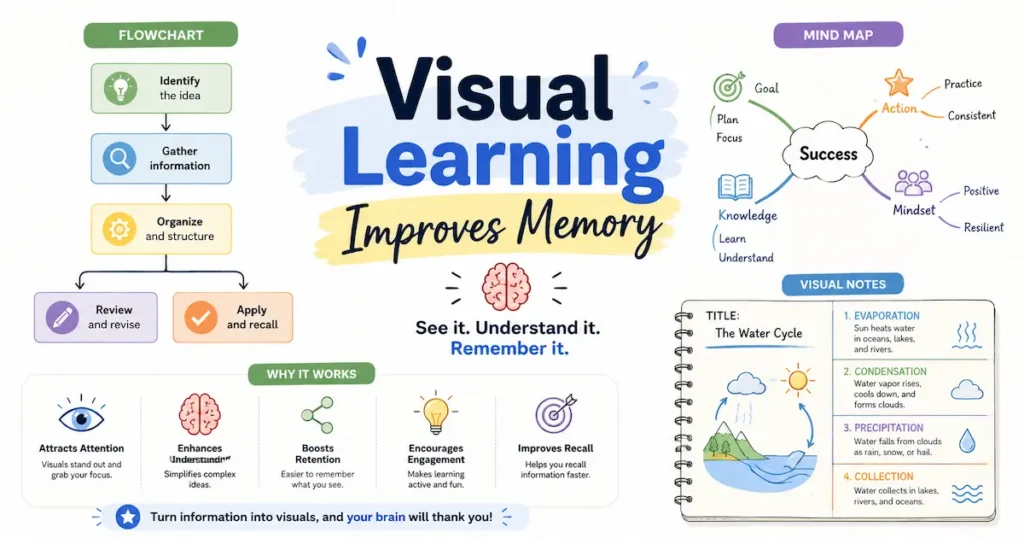
Examples
- Mind maps
- Diagrams
- Flowcharts
- Timelines
- Infographics
You often remember visual information faster than simple notes.
7. Practicing information retrieval
One of the best study strategies for exams.
Practicing information retrieval is one of the most powerful methods for exam preparation.
Instead of reviewing notes repeatedly:
- Solve questions
- Take mock tests
- Use previous year question papers
- Take regular self-tests
This prepares your brain for real exam situations.
8. Make the most of sleep
Sleep directly affects memory formation.
During deep sleep, your brain is able to organize and store information that you have learned during the day.

Science-Backed Sleep Tips
- Sleep 7 to 9 hours
- Avoid studying all night
- Review your studies before bed
- Avoid using screens late at night
Students who sleep well generally perform better academically.
Barriers faced by students in modern learning
Distractions from digital devices
Short content platforms shorten your attention span.
Notifications prevent you from consolidating information in your memory and reduce your concentration.
Ways to reduce distractions from digital devices:
- Turn on focus mode
- Keep your phone away while studying
- Use website blockers
- Study in a distraction-free environment
Apps like Forest and Freedom can help you maintain your focus.
AI tools and modern teaching methods
Artificial intelligence is changing the way students study. Some useful AI-powered study tools to make your studies smarter are:

- Use Open AI’ Tools for easy explanations
- Use Google’s Google Gemini for summaries
- Use Notion Labs’ Notion for easy study notes
However, AI’s job is to support your learning, not replace thinking.
You still need to actively remember and practice.
An effective daily study routine
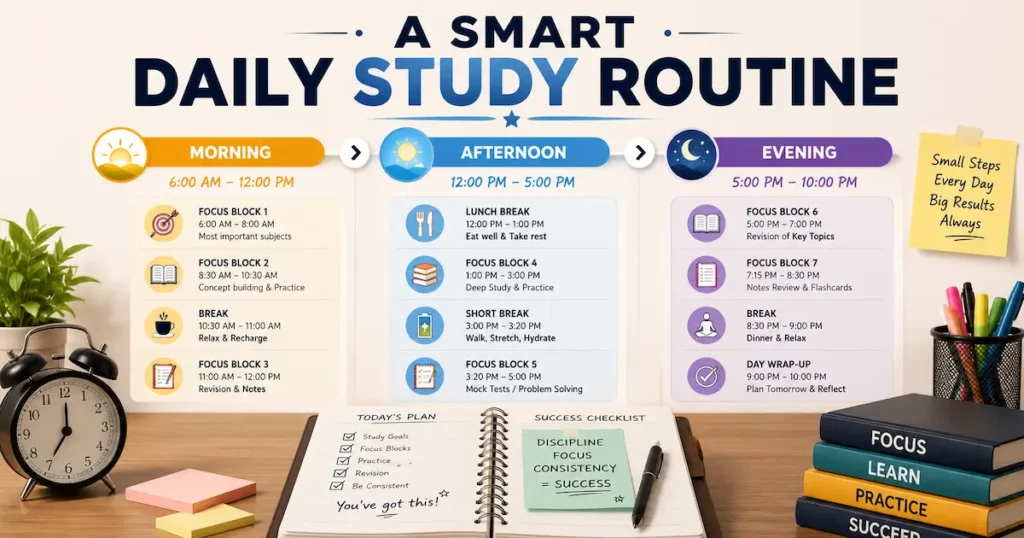
effective daily study routine:
Morning
- Review old reading
- Tack on difficult topics first
Your brain is freshest in the morning, so difficult and old reading is best studied at this time.
Afternoon
- Practice questions
- Use active recall methods
Using active recall methods in the afternoon can help you remember your reading more deeply.
Evening
- Light review
- Using flashcards
- Making a study plan for the next day
Before bed
- Quickly review the day’s readings
- Avoid overusing social media
Consistency is more important than motivation.
The biggest mistakes in studying that you should avoid
Avoiding lazy reading
Just highlighting lines in a book does not increase your ability to remember what you read much.
Avoiding hasty memorization
The art of hasty memorization the night before an exam quickly disappears from your mind.
Stop multitasking
Scrolling through Facebook-YouTube while studying completely destroys your concentration.
Continuous reading without taking breaks
If you do not take breaks in between, you will get mental fatigue, which slows down the speed of learning new things.
Neglecting sleep
If you do not get enough sleep, your ability to concentrate and memory are seriously affected.
Topic-wise best study strategies
Mathematics
- Solve real-world problems directly
- Explain each rule step by step
- Focus on the underlying patterns in math
Science
- Use pictures or images to make reading easier
- Use self-remembering methods after reading
- Revise at regular intervals
History
- Make a timeline of the year
- Remember historical events like stories
- Develop a habit of remembering over and over
Language
- Try to speak the language every day
- Practice by making small flashcards
- Listen attentively and say it out loud
How long should students study each day?
According to various studies: 2 to 4 hours of fully immersed study per day is enough to learn effectively.
In fact, it is more important than how long you sit with a book, or how deeply you pay attention. It is much better to study fully intensively, even for a short period of time, than to be upset or have a book open sporadically all day.
Frequently Asked Questions (FAQ)
Question: What is the most effective study strategy?
Active recall and spaced repetition are considered to be one of the most effective learning methods supported by science.
Question: Is studying at night bad?
It doesn’t have to be. Some students can concentrate better at night. The important thing is that you need enough sleep to study.
Question: How can I increase my focus while studying?
Avoid distractions while studying, use Pomodoro sessions, and study in a quiet environment.
Question: Are flashcards effective?
Yes. Using flashcards in conjunction with active recall and spaced repetition is very effective.
Question: How many hours should students study per day?
Most students achieve their best results if they study for 2 to 4 hours a day, rather than sitting with a book all day.
Question: Is there any benefit to listening to music while studying?
Some light instrumental or lo-fi music can help you focus. However, listening to songs with lyrics or words can interfere with your study.
Question: Can AI tools improve the quality of your studies?
AI tools can basically help you understand any difficult topic and organize your notes easily. However, your real learning will depend entirely on your own thinking and practice.
Conclusion:
The best study strategy for you is the one that your brain can naturally accept and remember. Students who develop the habit of memorizing reading on their own, revising at intervals, practicing according to the rules, and getting enough sleep can learn anything quickly with very little mental stress.
These small changes in your study habits will bring you big success in your academic life over time.

Let us know your feedback!
Share your study experience: Which study routine works best for you? Share your valuable tips and study experiences with us in the comment box below.