

Introduction:
A well-designed study environment for concentration can help students focus, learn quickly, and reduce study-related stress.
From the lighting and decor of your room to the distractions of digital media and your own reading habits—everything around you has a profound impact on how effectively you learn.
In this guide, we will discuss in detail how to create the perfect study space for yourself, which will contribute to increased concentration and better academic success.
The best study environment for concentration
A student’s ability to make the most of an hour at the desk or spend three frustrating hours struggling to maintain attention largely depends on the type of study environment they have.
Many students blame themselves for not being able to concentrate on their studies.
However, in reality, the real problem lies in the environment around them.
A noisy room, constant notifications on your phone screen, dim lighting, or an uncomfortable chair—you may be unknowingly playing the twelve-key game of attention.
But the good news is that paying close attention is not just about willpower. Instead of fighting a futile battle with studying, the real solution is to create a 100% supportive environment for studying.
Whether you study at home, in the library, or online, the right environment helps you stay focused, motivated, and productive.
Why the study environment matters
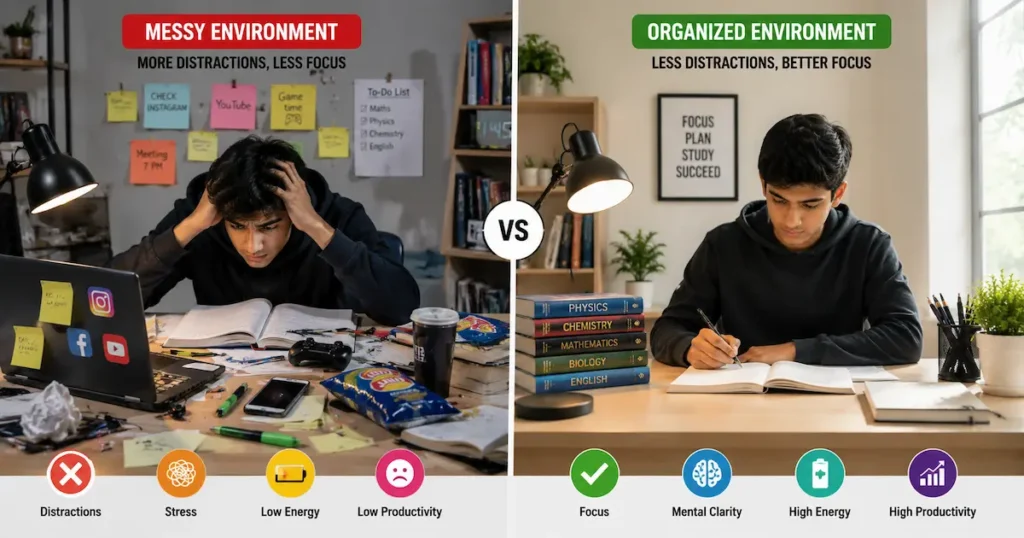
Your brain is constantly processing information and signals from the environment around you. Every sound, object, notification, or obstacle in the environment competes with each other to grab your attention.
So if your study space is full of distractions, your brain wastes a large part of its valuable mental energy filtering out those unnecessary things. A clean and organized environment saves your brain from the stress of dealing with these external distractions.
Benefits of a good study environment
- Increases attention span and productivity
- Increases learning retention
- Reduces mental fatigue
- Increases consistency in studies
- Plays a major role in achieving good academic results
- Develops positive and long-lasting study habits
- Reduces stress related to studies
Various studies conducted in educational psychology have repeatedly proven that when students study in a well-organized, organized, and less distracting environment, their test results are naturally much better.
The science behind attention
Simply put, attention is the ability to keep your brain focused on a specific task while completely ignoring all other interesting or distracting information around you.
When you scroll through Facebook-Instagram, reply to messages, or keep switching your attention repeatedly in the midst of the surrounding noise, your brain faces a complex problem. In medical terms, experts call this attention residue.
This simply means that even after you put down your mobile phone and return to studying, a large part of your mind or attention remains stuck on the previously left chatting or Facebook topic.
What happens as a result of this:
- The speed of learning new things decreases drastically
- Memory becomes weak and it is not easy to remember reading
- The tendency to make mistakes in studies increases greatly
- Mental fatigue or fatigue comes very quickly
Therefore, if the study environment is suitable and organized for attention, it helps the brain to keep attention for a long time by reducing this attention residue.
Essential elements of the best study environment for concentration
1. A quiet study area
The biggest enemy of paying close attention to your studies is external noise. The conversations of people around you, the sound of the television, the honking of road vehicles, or daily activities at home can repeatedly stop your thinking.
Ways to reduce noise
- If possible, choose a completely separate room for studying
- Use noise-cancelling headphones
- Play light white noise in the background
- Listen to the quiet sounds of nature
- Inform family members in advance about your specific study time
2. The right lighting
The lighting in the room directly affects both your attention and your body’s energy level. Problems that usually arise when there is not enough light in the reading area:
- Excessive strain on the eyes
- Headaches may start
- Laziness or drowsiness may occur
- Lower interest or motivation to study
Natural light vs. artificial light
Natural light
Natural sunlight during the day is always the best option for studying.
Some of its wonderful benefits are:
- Keeps the mind alert and alert
- Keeps the mood good
- Relieves eye fatigue or fatigue
- Increases reading productivity or work speed
Artificial light
If you do not have access to enough natural light in your room:
- Use a good quality and bright desk lamp
- Choose a soft white light that is comfortable for the eyes
- Avoid reading in an excessively dim or dark room
- Make sure that the harsh light from a laptop or computer screen does not fall directly on your eyes
A beautiful and moderate lighting helps keep your brain always active, active and functional.
3. Comfortable seating and proper posture
Many students take the importance of proper posture while sitting at the study table very lightly. But it is almost impossible to study for a long time sitting on an uncomfortable or broken chair.
Ideal reading posture
- Keep your back straight or propped against the chair
- Keep both feet flat on the floor
- Keep your shoulders relaxed without straining
- Keep the laptop or book screen at eye level
- Keep your hands in a comfortable position on the table
4. Organized reading desk
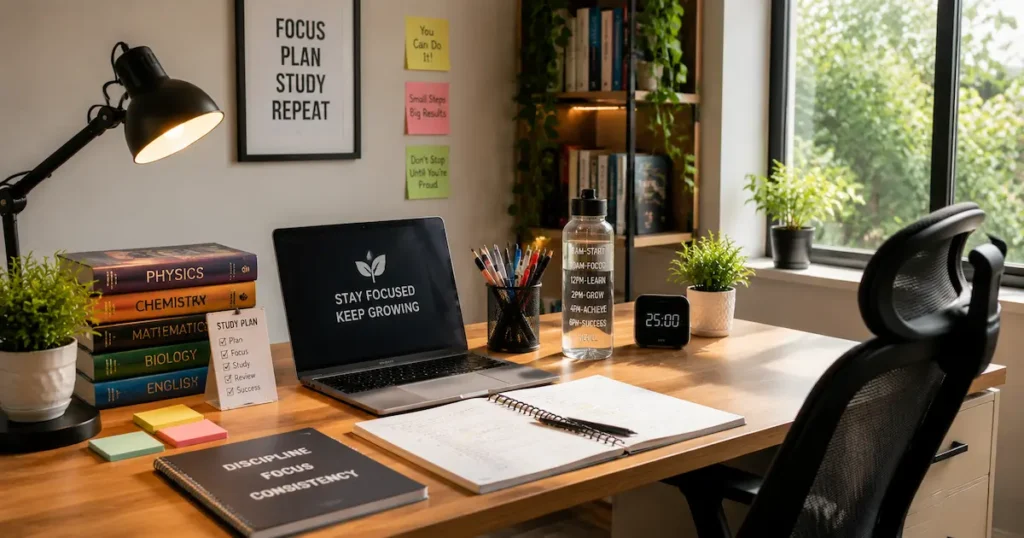
Your reading desk should help you focus, not be a distraction.
Keep only the necessary items close at hand
For example:
- Necessary notebook or diary
- Specific textbooks
- Necessary pen or pencil for writing
- Laptop or tablet (if needed)
- A bottle of drinking water
Immediately remove from the table:
- Toys or showpieces
- Any unnecessary gadgets or devices
- Old papers lying around
- Any other things unrelated to studies
A clean and tidy desk helps to keep the mind fresh and relaxed in an instant.
How to create a focused study environment at home
These days, studying at home or online is becoming quite popular day by day. However, there is no shortage of distractions in studying in the familiar environment of home.
Choose a specific place to study
If you make a habit of sitting and reading in a specific place in the house every day, your brain automatically recognizes that special place as a ‘studying place’. Some great places you can choose to study:
- A specific reading desk in the house
- A quiet corner in the library
- An extra quiet room in the house
- A quiet balcony with the shade of a tree
- A small reading corner in the house
This consistency of sitting in the same place every day will make your concentration much stronger over time.
Put your phone away
A single notification from social media is enough to completely destroy your hard-earned concentration.
Various modern studies have shown that even if you do not use your phone and just leave it in front of your eyes or on the table, your ability to focus subconsciously decreases.
Better options
- Leave your beloved phone in another room while studying
- Turn on the airplane mode option on your phone
- Use various app blockers to maintain attention
- Fix a specific break time between studies to check your phone

Prepare before starting
Get everything you need together and close at hand right before you sit down at the study table.
Study preparation checklist
- Necessary books
- Notebook or notebook
- Pen, pencil and highlighter
- Laptop or phone charger
- Ample drinking water
- All materials for assignments or projects
Being fully prepared in advance can avoid the unnecessary hassle of getting up again and again in the middle of studying.
The best room temperature for studying
The temperature inside the room has a direct impact on your ability to concentrate. An excessively hot room makes your body sluggish and causes drowsiness or sleep quickly.
Again, a room that is too cold also creates a kind of discomfort for the body. It has been found that most students can concentrate best on studying in a moderately cool or comfortable environment.
Temperature-related advice
- Always keep fresh air circulating in the room.
- If possible, open the window of the room a little while studying.
- Use a fan as needed to keep the air in the room active.
- Always avoid airless rooms.
Fresh air circulating in the room increases mental alertness and eliminates prolonged fatigue of the body.
The best colors for the study room
According to color psychology, a touch of certain colors can greatly affect your attention, mental state, and mood.
Blue
The color blue is generally considered a symbol of deep concentration, peace of mind, and increased work productivity.
Green
Green creates a very comfortable environment for the eyes and helps to quickly reduce the accumulated stress in the mind.
White
The use of white color in the study room brings out the cleanliness, brightness and a sense of order to the eyes.
Light gray
The light gray color greatly reduces the eyes’ distraction or wandering of attention. However, it is absolutely not advisable to use any excessively bright or harsh color on the walls of the study room.
How Indoor Plants Can Improve Concentration
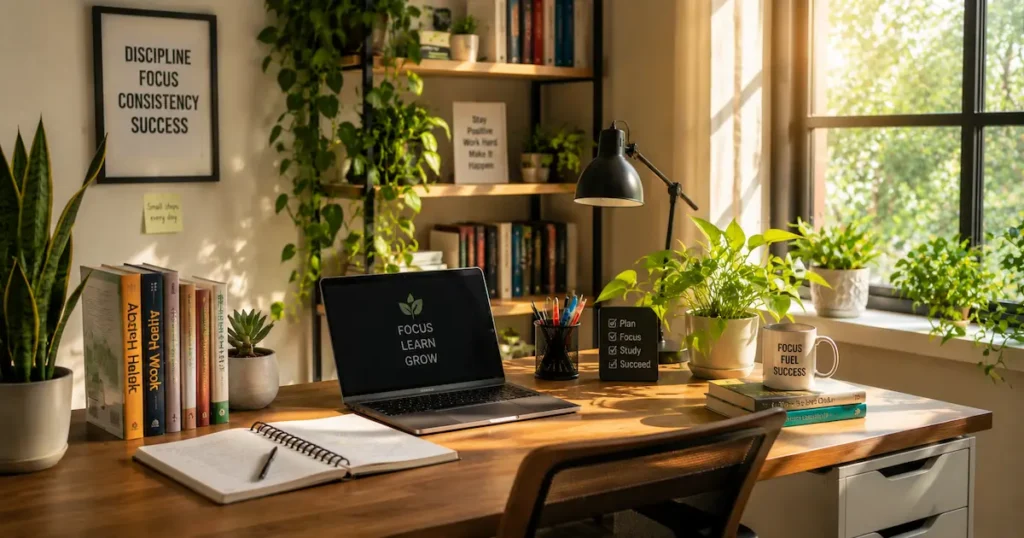
Keeping some beautiful green plants in your study space has become a very popular trend these days to increase work speed and productivity. Indoor plants mainly help you in the following areas:
- Keep your mind and mood sharp
- Reduce the stress or fatigue of studying
- Multiply increase the beauty of your work or study space
- Create a calm and soothing atmosphere in the surrounding environment
Popular plants in study rooms
- Snake plant
- Spider plant
- Peace lily
- Pothos or money plant
A small green plant placed in a corner of your study table can make your entire study space much more attractive and lively.
Digital distractions: Modern causes of losing concentration
Today’s students face some difficult challenges that no one in previous generations ever thought of.
Small reels or short videos on smartphones are competing with each other to grab your attention.
Common Digital Distractions
- Scrolling TikTok or Instagram Reels
- Continuous Facebook and Instagram notifications
- Various alerts from online games
- Messages from friends’ group chats
- One-by-one video suggestions from YouTube
Solution
Using Focus App
Some popular and effective apps you can use to stay away from your phone while studying are:
- Forest
- Freedom
- Cold Turkey
- StayFocused
Closing Unnecessary Tabs
Every extra or unnecessary tab you open in your browser creates a temptation to divert your mind from studying.
Closing Notifications
A single notification on your phone means that your attention span is completely cut off.
Therefore, digital discipline or controlling your phone usage is the biggest and most important part of creating a study environment for concentration.
Study Environment for Online Learning
These days, learning through online classes requires a little extra organization and preparation.
Essential setup for online learning
Reliable internet connection
Repeated network problems or buffering can completely destroy your focus while studying.
High-quality headphones
A good headphone blocks out ambient noise and helps you hear the teacher’s voice clearly.
Well-organized digital workspace
Keep your study files and PDFs neatly organized in folders on your laptop or computer.
Correct webcam positioning
During virtual classes and live presentations, make sure the camera is focused correctly at your eye level.
Close irrelevant apps
Completely avoid the habit of running other apps or multitasking during online classes.
The best study environment for different learning styles
Remember, not every student has the same learning and understanding style.
Visual learners
- The best environment for them:
- Adequate and bright lighting
- Various diagrams or images
- Infographic charts
- Use of colorful notes and highlighters
Auditory learners
The best environment for them:
- A completely quiet and peaceful environment
- Listening attentively to recorded lectures or audio
- Opportunities to discuss reading with classmates
Students who learn through reading and writing
The best environment for them:
- Well-organized and detailed hand notes
- Printed original books and necessary materials
- Where there is absolutely no chance of losing attention
Students who learn through physical activity
The best environment for them:
- A little movement or walking break between reading
- A desk arrangement suitable for standing reading
- Practical or various interactive learning activities
If you understand your learning style correctly, you can use your study space in the best way for yourself.
Powerful study habits that increase focus
No matter how great your study environment is, you need to have some good habits to make it work.
Set a clear goal
Instead of saying vague things like, “I will study for two hours today,” before sitting down at your study table, give yourself a specific target:
- I will finish chapter 5 of Physics today and solve at least 10 previous year questions.
When the goal is specific and clear, focus automatically increases a lot.
Use the Pomodoro Technique
This is one of the most popular methods in the world to maintain deep focus while studying.
How it works
- First, set a timer on your watch for 25 minutes and read continuously.
- After the 25 minutes are up, take a short break of 5 minutes.
- Repeat this rule 4 times in a row (4 sessions).
- After the 4 sessions are over, take a long break (20-30 minutes).
This excellent method protects the brain from the fatigue of continuous work and maintains the energy of reading.

Taking healthy breaks
Instead of scrolling Facebook during breaks in between reading, develop some good habits, such as:
- Stretching the body a little or moving your arms and legs lightly
- Walking around the house a little
- Drinking a glass of pure water
- Taking a few deep breaths with your chest full
Remember, scrolling through social media during these short breaks in reading increases mental fatigue, so avoid it.
Common mistakes that ruin attention
Many students unknowingly make the following mistakes while reading every day:
- Studying while sitting in bed: This habit gives the brain more sleep signals than reading.
- Keeping the phone close: Keeping the phone in front of your eyes even if it is silent means that the ability to concentrate decreases.
- Insufficient light: Trying to read in low light puts severe strain on the eyes and causes rapid fatigue.
- Messy study table: The messy state of the table constantly draws the eyes and attention to the other side.
- Multitasking: Trying to listen to music, chat, and study at the same time can lead to memory loss and performance loss.
- Not having a specific study schedule: The habit of reading from time to time makes attention random and irregular.
- Ignoring breaks: Reading for hours without a break can quickly lead to severe mental fatigue.
If you consciously avoid these common mistakes, the quality and results of your studies will improve dramatically.
H2: Daily study environment checklist
Just ask yourself these few questions before sitting at your study table every time:
- Is my study table completely tidy and clean?
- Is my mobile phone kept away from me?
- Is the surrounding environment or room quiet enough?
- Is there enough light at my table for studying?
- Have I brought all the necessary materials for studying with me?
- What exactly am I going to read now—is that goal clear to me?
- Is a bottle of water ready to go?
Although it may seem simple, this checklist practice will immediately increase your interest and performance in reading.
Long-term strategy for creating a better study environment for concentration
Remember, creating a better study environment for concentration is not a one-day task, it is an ongoing process. Those who are highly successful in their studies are constantly improving their surroundings and reading habits.
H3: Long-term success habits
- Clean up your desk after each day’s reading
- Adhere to a specific and consistent study routine
- Upgrade your reading light or table and chair as needed
- Remove any new distractions as soon as they appear
- Review your entire study system every month
Frequently Asked Questions (FAQ)
Question: What is the best study environment for concentration?
A quiet, tidy, and well-lit space—a place with minimal distractions, a comfortable chair and table, and all the books and notebooks you need to study—is organized and within easy reach.
Question: Is it better to study in a quiet environment?
This is entirely a student’s personal preference. Some students study best in complete silence, while others find it easier to concentrate with some soft instrumental music or white noise in the background.
Question: How can I stop my phone from distracting me?
The easiest way is to leave my phone in another room while studying, turn off all notifications, use focus apps, and set aside a specific time outside of studying to check messages or social media.
Question: Does natural light improve concentration?
Yes, absolutely. Natural daylight keeps your mind and body alert, improves your mood, and reduces eye strain during long periods of reading.
Question: Is it okay to study in bed?
It is generally not a good idea. This is because the bed gives your subconscious a sense of relaxation and sleepiness, which makes it much harder to concentrate on studying.
Question: How often should I take study breaks?
Depending on the difficulty of the reading material, taking a short break of 5 to 10 minutes after every 25 to 50 minutes of reading is most effective for most students.
Question: What colors help increase concentration?
According to color psychology, calm and light colors like blue, green, white, and light gray are great for keeping your attention and increasing productivity.
Question: Can plants improve the study environment?
Yes, placing small indoor plants or indoor plants in the study area can help reduce the surrounding stress, keep your mind healthy, and make the study environment much more pleasant.
Conclusion:
Creating a study environment for concentration doesn’t mean you have to spend a lot of money to build a very luxurious reading room. The real purpose is to make some conscious and organized decisions in your study space that will help you to study effectively by keeping your brain calm.
So start small today. Tidy up your study desk, adjust the lighting, remove distractions and create a regular study routine.
Share your experience:
What exactly is your ideal study environment? Do you know any special techniques or tricks to maintain deep concentration at the study table for a long time?
Share your wonderful experience with us in the comment box below, which will show other students new ways to create a beautiful and supportive environment for studying!