
Introduction
How to study for long periods of time is one of the biggest challenges for today’s students. Many students sit for hours with books, but quickly lose focus, feel mentally exhausted, or are distracted by their phones and social media.
The truth is simple: studying for long periods of time doesn’t mean pushing yourself too hard. The key is to use your energy wisely, increase your focus, and gradually develop a solid study habit.
Some students think that successful students are born with a natural ability to concentrate. But in reality, the ability to study for long periods of time is a skill that anyone can acquire with the right approach. If you often feel tired while studying, procrastinate, or struggle to stay focused, this complete guide will help you learn practical ways to study for long periods of time without getting tired.
Why do students get tired while studying
Before you can learn how to study for long periods of time, you must understand why you lose energy quickly while studying.
Common Causes
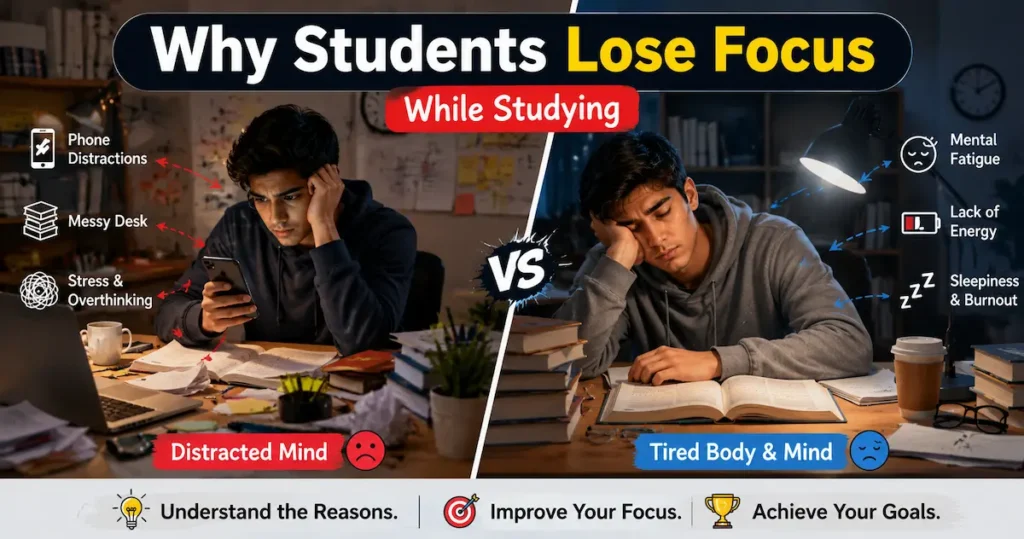
- Excessive phone use
- Insufficient sleep
- No study routine
- Study without interruption
- Multitasking
- Stress
- Unhealthy eating habits
- Unrealistic expectations
Many of us students suddenly try to study for 8 to 10 hours. It’s like trying to run a marathon without training.
Our brains need to be trained gradually.
Step-by-step ways to study for longer periods
Start small and build up gradually
One of the biggest mistakes students make is suddenly trying to study for longer periods. Instead:
Week 1
Study:
- 45 minutes
- Take 10-minute breaks
Start the first week like this.
Week 2
Increase the time:
- 60-minute sessions
Week 3
Increase the time again gradually.
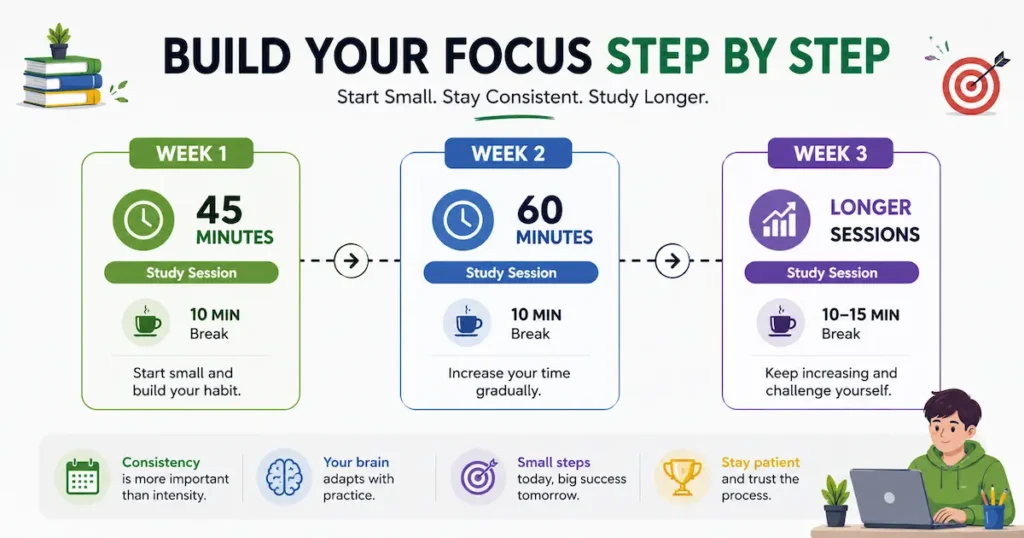
Over time, your brain’s ability to sustain attention builds.
Consistency is more important than intensity.
Create a conducive environment for studying
Your environment directly affects your concentration.

Keep your study space clean
A messy desk disrupts mental focus.
What should be on your study table:
- Adequate lighting
- A water bottle
- Only necessary books, notebooks
- A comfortable chair
Eliminate digital distractions
Phone notifications destroy deep concentration.

Try these methods:
- Keep your phone in another room while studying to maintain concentration
- Use silent mode
- Use app blockers
- Study offline when possible
A mindful environment helps you study for longer periods of time without mental fatigue.
Use the Pomodoro Technique
The Pomodoro Technique is one of the best methods for studying for longer periods of time without fatigue.
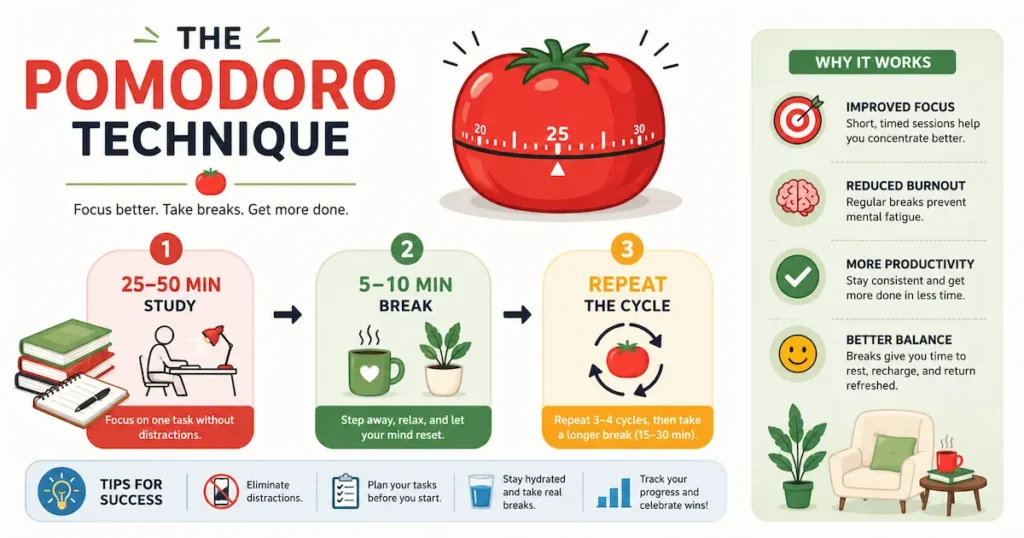
How it works
Study:
- 25–50 minutes
Break:
- 5–10 minutes
After 4 sessions:
Take longer breaks
This method helps your brain to refresh regularly.
Focus on deep study instead of lecture
Many students sit with books for hours but learn almost nothing.
This is called passive study.
Active study method
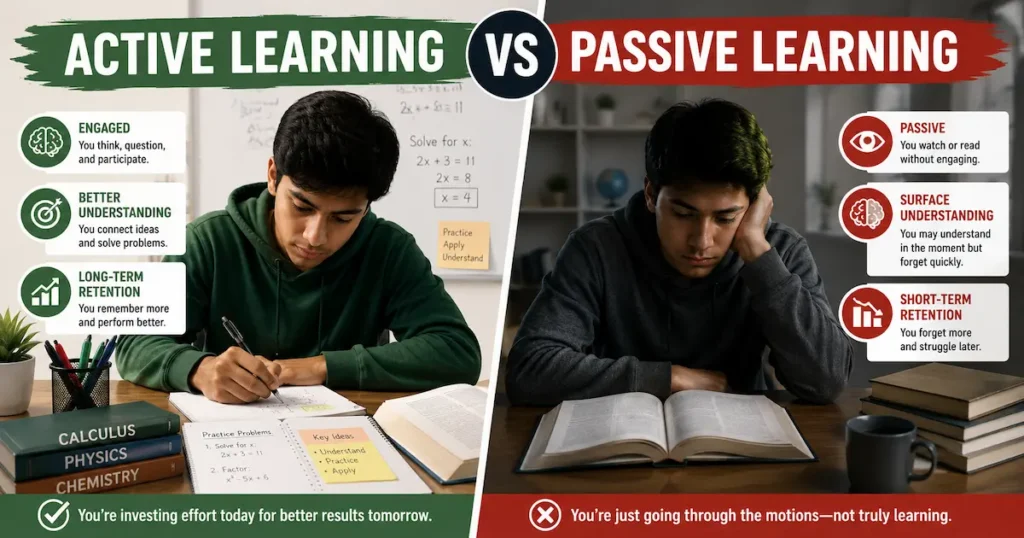
Instead of just reading:
- Solving questions
- Learning concepts out loud
- Using flashcards
- Practice memorization
- Writing summaries
This keeps your brain active through active learning.
How to study for long periods of time without losing focus
Never sit aimlessly studying.
Bad goals:
- I will study all day.
Good goals:
- I will finish Chapter 3 and solve 20 math problems.
Clear goals increase focus instantly.
How to train your brain to stay focused
Attention is like a muscle.
The more you train it, the stronger it will become.
Ways to improve focus
- Meditate for 5 minutes
- Read uninterruptedly
- Reduce time spent on social media
- Avoid multitasking
- Make a habit of working deeply
Even small improvements in focus can make a huge difference in your studies.
The importance of sleep for long periods of time
Many students sacrifice sleep to study more.
This actually reduces productivity.
Why sleep is important

What actually happens to your body when you sleep? :
- Your brain stores information
- Your memory improves
- Your mental fatigue decreases
- Your ability to maintain attention increases manifold
Students who sleep properly often learn faster than students who stay up all night.
H4: Ideal sleep duration:
7 to 8 hours of restful sleep every day is essential to keep your body and mind refreshed and healthy.
Best foods for long-term study
Your brain needs the right fuel.
Foods that boost brain power

Good options:
- Almonds
- Bananas
- Eggs
- Oatmeal
- Yogurt
- Fruits
- Green vegetables
Foods to avoid to stay focused while studying for a long time
- Excess sugary foods
- Junk foods
- Excess oily foods
- Excess caffeine
These foods give a temporary boost of energy followed by a drop in energy.
Keep your body hydrated while studying
Even slight dehydration disrupts concentration.
Easy habit
Keep a water bottle near your desk.
Drinking enough water:
- Increases alertness
- Reduces headaches
- Prevents fatigue
Exercise improves the quality of study
Students often neglect physical activity.

The mental and physical benefits of regular exercise:
- Increases brain performance: It increases the efficiency of the brain and helps you make quick decisions on any matter.
- Keeps your mood up: Regular exercise can reduce stress and depression and keep the mind happy from within.
- Provides endless energy to the body: It eliminates laziness and increases your body’s energy level to work throughout the day.
- Sharpens memory: It helps you remember any information for a long time by keeping the brain cells active.
Best Exercises for Students
- Walking
- Stretching
- Yoga
- Skipping
- Light Cardio
Even 15-20 minutes a day helps a lot.
How to Avoid Study Fatigue
Fatigue occurs when students put too much pressure on themselves without taking breaks.
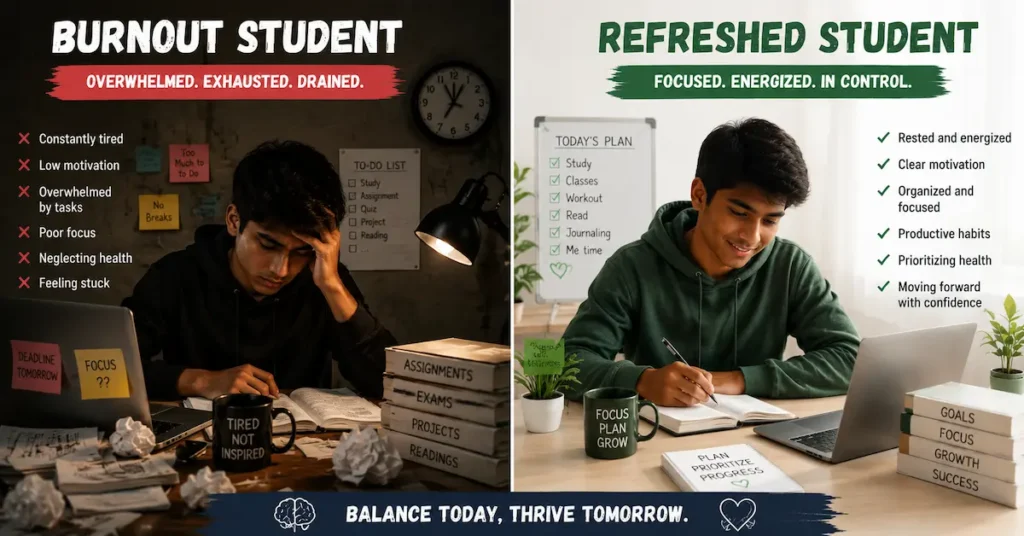
Symptoms of Fatigue
- Constant Fatigue
- Lack of Motivation
- Lack of Attention
- Feeling Boredom
How to Prevent Fatigue
Key Strategies:
- Take breaks between studies
- Sleep properly
- Avoid overwork
- Study intelligently, not constantly
- Maintain hobbies
- Talk to friends
Rest is part of productivity.
5-Minute Rule for Lazy Days
Some days you won’t feel like studying at all.
That’s normal.
Using this strategy
Tell yourself:
- I will only study for 5 minutes.
Most of the time, getting started is the hardest part.
Once you start, momentum builds naturally.
H2: The best study habits of successful students
Highly disciplined students typically:
- Study at the same time every day
- Avoid distractions
- Revise regularly
- Sleep regularly
- Plan their day
- Focus on progress rather than perfection
Small daily habits create big success in the long run.
How to study for longer during exams
Exams require more focus and better planning.
Exam preparation tips
Create a revision plan
Spread the topics over multiple days.
Prioritize difficult topics
Study difficult topics when you have the most energy.
Practice mock tests
It increases reading speed and confidence.
Avoid staying up all night
Lack of sleep weakens memory.
Morning vs. night study: Which is better?
There is no perfect answer to this.
Some students focus better in the early morning.
Others do better at night.
The best time to study is:
When:
- You feel mentally active
- You can concentrate deeply
- Distractions are minimal
Choose a consistent study schedule.
Mistakes that students must avoid
Common mistakes
Studying without breaks
It causes mental fatigue.
Multitasking
Repeatedly switching between apps destroys focus.
Comparing yourself to others
Focusing on your own progress.
Waiting for motivation
Discipline is more important.
Unrealistic study goals
Slow progress is more effective.
How to stay motivated to study for a long time
Motivation naturally fluctuates.
Don’t rely on feelings.
Instead:
- Create a realistic routine: Don’t just create a nominal routine, create an effective routine that matches your daily work
- Follow the schedule strictly: Creating a routine is not the last thing, create a mindset to follow that schedule every day by overcoming laziness.
- Keep track of your progress: Keep a track or account of how much work or study you were able to complete at the end of the day. This will catch your shortcomings.
- Celebrate small successes: Reward yourself even if you meet any small goal. This will increase your inner confidence many times over.
- Work creates inspiration, not the other way around: Many of us look for ‘motivation’ or inspiration to get to work. But the truth is, when you start working, inspiration will come naturally. So instead of waiting for inspiration, start today.
Work creates motivation.
Not the other way around.
Frequently Asked Questions
Question: How to study for a long time without falling asleep?
Along with getting enough sleep and water, take short breaks between studies and avoid eating heavy meals before studying.
Question: Is studying for 10 hours a day really good?
The effectiveness of studying depends more on deep concentration than on time, so it is much better to study for a short time with concentration than to sit idly for 10 hours.
Question: What is the best strategy for studying for long periods of time?
The Pomodoro Technique and Active Recall work extremely well for most students.
Question: How long should a study break be?
Typically:
5 to 10 minutes after each study session
Longer breaks after multiple sessions
Question: Can anyone learn the technique to study for long periods of time?
Yes. Remember, the ability to maintain focus is something that develops gradually through consistent practice and healthy habits. It doesn’t happen overnight, so give yourself time.
Question: Does listening to music while studying help you concentrate?
Many students can concentrate quite well with light instrumental or lo-fi music playing in the background. However, listening to songs with lyrics or words can distract you from the music rather than studying, which can reduce your concentration.
Conclusion
Ultimately, the ability to focus is not a magical thing, but a skill that can be acquired through practice. Proper brain training, adequate sleep, and a healthy lifestyle can greatly increase your learning and work speed. So start taking small steps today and believe in yourself—success will come.
Some days will feel productive. Other days will feel difficult. That’s completely normal.
The key is not to be perfect.
The key is to be consistent.
Over time, even small improvements in focus, discipline, and energy management can completely transform your study results.
Remember: studying for long periods of time alone doesn’t make you successful. Studying smart and attentively does.

Tell us your opinion!
What are your biggest challenges when studying for long periods of time?
Do you struggle with lack of focus, sleepiness, procrastination, or excessive stress?
Share your experience in the comments below and help other students learn from your experience. Also, don’t forget to share this guide with friends who want to improve their study habits and focus!